
Odoo will DATEV ersetzen. Der Mittelstand bleibt bei seinem Steuerberater
Odoo 20 verspricht die direkte Steueranbindung ohne DATEV-Umweg. Für die meisten Mittelständler entscheidet aber weiter der Steuerberater mit. Warum die Brücke die realistischere Wette ist.
Simon Stappen, Managing Partner bei einem Odoo-Partnerunternehmen, postet auf LinkedIn ein Bild: „Odoo 20 ersetzt DATEV“, grünes Logo, roter Balken. Ein starkes Bild. Nur widerspricht er sich selbst, zwei Absätze weiter oben.
Er schreibt es klar: 90 bis 95 Prozent der Steuerberater in Deutschland arbeiten strikt mit DATEV. Null offen für andere Systeme. Sein eigenes Fazit dazu: „Jain.“
Für den klassischen Mittelständler ändert sich im Alltag erst einmal wenig, weil die Daten am Ende ohnehin wieder zu DATEV exportiert werden.
Das Versprechen und sein Preis
Odoo 20 bringt eine ELSTER-Anbindung für Deutschland und FinanzOnline für Österreich. Die Umsatzsteuervoranmeldung soll direkt aus dem ERP laufen, ganz ohne DATEV-Umweg. Technisch ein Fortschritt.
Wirtschaftlich trifft er eine kleine Zielgruppe: Unternehmen, die ihre Buchhaltung zu 100 Prozent inhouse fahren, ohne Steuerberater. Für alle anderen, also für die große Mehrheit im Mittelstand, entscheidet weiterhin der Steuerberater mit, welche Software läuft. Das ändert eine neue ERP-Funktion nicht.
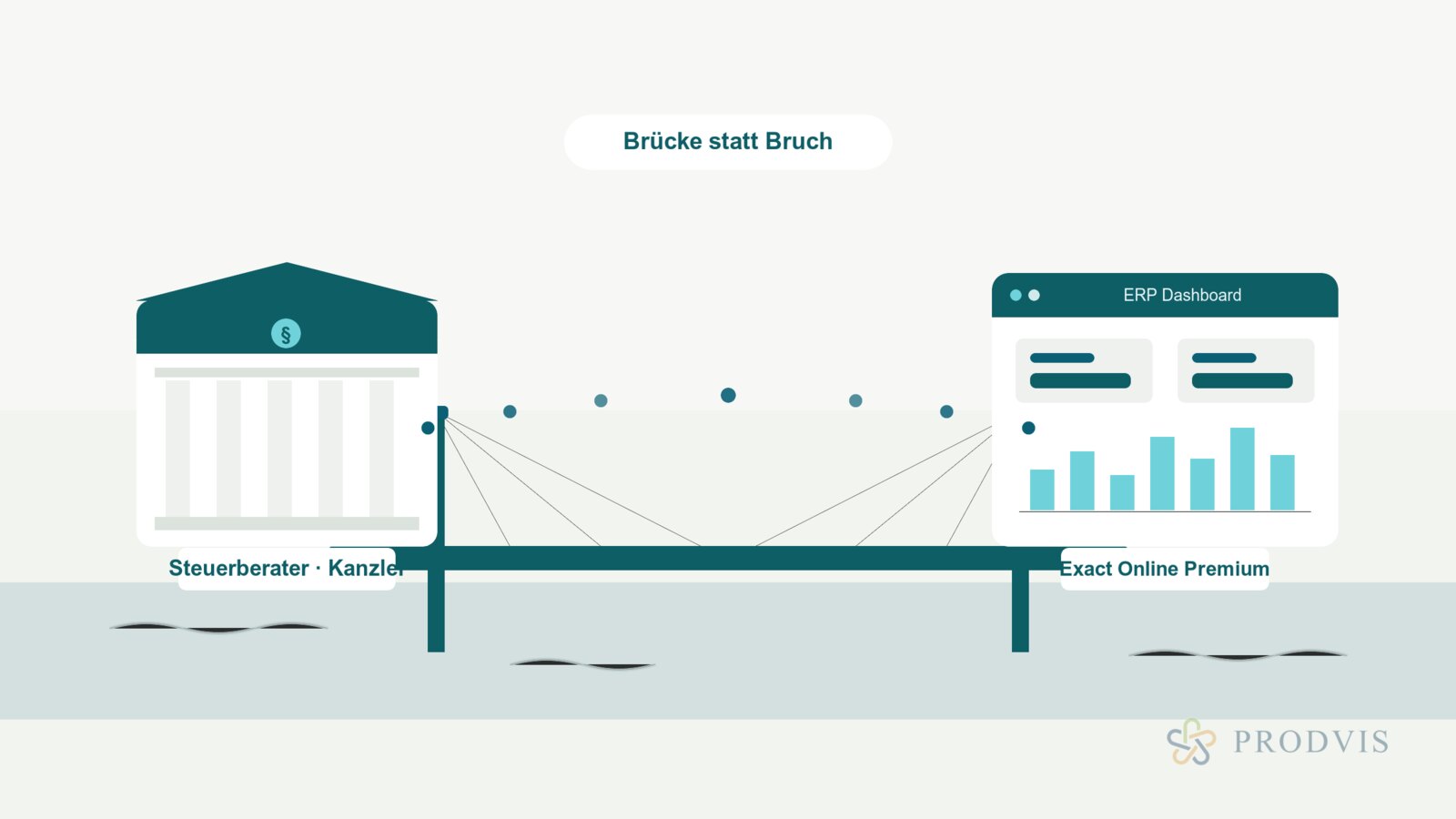
Der PRODVIS-Weg: Brücke statt Bruch
Exact Online Premium geht genau deshalb den anderen Weg. Die Software bringt eigene DATEV-Schnittstellen mit, „zur Unterstützung bereits vorhandener Buchhaltungslösungen“, plus direkten Zugang für den Steuerberater[1]. Kein Ersatz. Eine Brücke.
Das ERP übernimmt Warenwirtschaft, Aufträge, Bestand und Kalkulation in einem System[2]. Die Finanzbuchhaltung bleibt dort, wo Steuerberater und Mandant sie seit Jahren kennen. Niemand muss einen jahrzehntealten Beraterkontakt kündigen, um moderner zu arbeiten.
Zwei ehrliche Randnotizen
Der Offline-Modus: erst in Version 19 getestet, jetzt nach Marktfeedback breiter ausgerollt. Genau so arbeitet auch PRODVIS bei jeder Einführung mit Exact Online Premium, nur ohne Marketing-Grafik: Ausgangslage verstehen, Scope begrenzen, Proof of Concept durchführen, Einführung umsetzen, Go-Live begleiten[3].
Und die KI: Claude ist jetzt nativ in Odoo, vorher nur ChatGPT und Gemini. Mehr Modelle sind gut. Aber ein zusätzliches Sprachmodell ersetzt keine Prozessarbeit. PRODVIS setzt KI-Agenten erst auf Exact Online Premium auf, wenn die Datenbasis im ERP stimmt[4].
Fazit
Odoo verkauft die Befreiung vom Steuerberater. PRODVIS und Exact Online Premium verkaufen die Zusammenarbeit mit ihm. Global denken, lokal handeln: Für den deutschen Mittelstand ist Letzteres die realistischere Wette, solange 90 Prozent der Steuerberater bei DATEV bleiben.
Prüfen Sie es an Ihrem eigenen Fall.
In einem kurzen Erstgespräch schauen wir gemeinsam auf Ihre Buchhaltungsstruktur, Ihren Steuerberater und Ihre ERP-Landschaft – und sagen ehrlich, ob ein Wechsel oder eine Brücke die bessere Lösung ist.
Quellen und weiterführende Links
- PRODVIS, Cloud ERP & Exact Online für den Mittelstand – prodvis.de/cloud-erp-exact-online-mittelstand.html ↩
- PRODVIS, Cloud ERP & Exact Online for B2B mid-market – prodvis.de/en/cloud-erp-exact-online-mittelstand.html ↩
- PRODVIS, Cloud ERP & Exact Online for B2B mid-market – prodvis.de/en/cloud-erp-exact-online-mittelstand.html ↩
- PRODVIS, Agentic AI in ERP for mid-market companies – prodvis.de/en/agentische-ki-erp-mittelstand.html ↩
Wolf Schumacher, CEO – PRODVIS, Productive Vision Deutschland. PRODVIS begleitet mittelständische Unternehmen bei Cloud-ERP mit Exact Online Premium, digitaler Transformation und KI-Integration.